

LLM Optimization Agency (AI SEO Agency)
AI SEO agencies have changed how businesses handle search engine optimization. These specialized agencies utilize artificial intelligence to analyze data, spot patterns, and implement strategies that boost website visibility in search engines.
These digital marketing experts use advanced algorithms and machine learning to handle complex SEO tasks quickly and accurately. They blend traditional SEO expertise with advanced AI SEO tools to deliver better results without manual process bottlenecks.
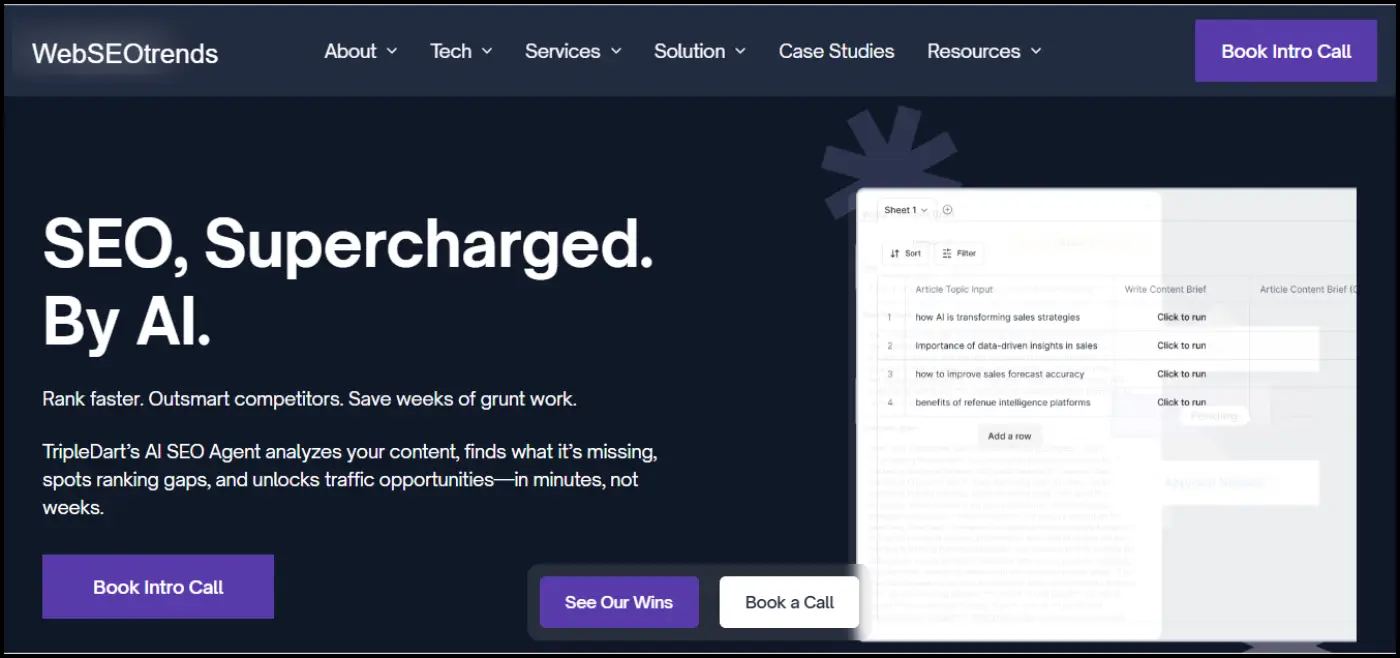
The biggest advantage of AI SEO agencies lies in their data processing capabilities. Traditional SEO relies on careful manual work to analyze information and make decisions. AI-powered agencies use sophisticated machine learning algorithms that quickly analyze huge datasets and predict outcomes accurately.
These agencies provide detailed services including:
- Advanced keyword research using algorithms that find terms with real traffic potential
- Technical SEO audits that automatically detect and prioritize issues
- Content optimization to appeal to both search engines and human readers
- Competitor analysis to understand website architecture, content quality, and backlink profiles
- Up-to-the-minute data analysis with AI-powered reporting tools
The cost benefits are substantial. Traditional SEO agencies usually charge monthly retainers between $2,000 and $20,000. AI-powered platforms deliver similar or better results for just $500 to $2,000 monthly. A mid-sized ecommerce website that pays $5,000 monthly for SEO services could get automated technical audits, content optimization recommendations, and competitive analysis for only $750 per month.
AI SEO agencies provide unbiased, evidence-based advice beyond cost savings. Their systems objectively track changes across entire sectors and measure what works. These agencies will soon analyze any website, show all implemented changes, and demonstrate their exact effect on search performance as AI combines smoothly with web platforms.
But AI SEO agents aren’t fully autonomous yet. They want to handle complex tasks independently but still need human oversight to work optimally. The most successful AI SEO agencies combine technological capabilities with human strategic insight to provide value beyond what automated platforms alone can deliver.
Businesses looking to improve their online visibility will find that AI SEO agencies offer a powerful mix of advanced technology, evidence-based strategies, and affordable solutions that traditional approaches can’t match.
What is LLM Optimization and Why It Matters
Large Language Models (LLMs) are changing the way people find information online. LLM optimization has become the next frontier for businesses that want to stay visible as AI takes over the search landscape. This approach helps your content get recognized and prioritized by AI systems that now control many search experiences.
Understanding LLMs in search
LLMs process natural language to interpret what users want, create better content, and improve search results. These models go beyond traditional keyword systems. They analyze context and word relationships, which helps them handle unclear questions and predict user needs accurately.
Search engines with integrated LLMs understand queries better and rank results more effectively. To name just one example, new Bing uses ChatGPT for Retrieval-Augmented Generation (RAG). This system feeds search results into the LLM’s context to create complete responses based on relevant information.
LLMs look at complete sentence structures instead of single keywords. A search like “how to fix a bike tire that won’t hold air” lets the model identify the main goal (fixing a punctured tire). It then connects this to helpful content, even without exact phrase matches.
How AI is changing SEO
AI advances make the search landscape change faster than before. Basic keyword optimization no longer guarantees success. Google’s RankBrain and BERT now use machine learning and natural language processing to understand search intent and show more relevant results.
So, the SEO industry faces major changes. Gartner expects traditional search traffic to drop by 25% by 2026. The data shows that 82% of people find “AI-powered search more helpful than traditional search engines.” This signals a clear shift in user priorities.
SEO has moved beyond keyword tricks. You need to build authority that algorithms recognize across the board. Citation-based relevance matters more than keyword ranking now. Digital PR and brand visibility have become key LLM factors.
The rise of generative engine optimization (Google AI Mode)
Generative Engine Optimization (GEO) grows more important as AI search expands. It aims to boost your website’s visibility in AI responses from ChatGPT, Perplexity, Gemini, and Google’s AI Overviews.
Google’s AI Mode marks a big step forward. It breaks down user questions into subtopics and runs multiple searches at once. This helps Search explore the web more deeply than before, connecting users with better content.
Google’s AI Overviews now reach 1.5 billion monthly users, showing AI’s significant role in search. Gemini and ChatGPT continue to grow, with 350 million and 600 million monthly users respectively as of March 2025.
Businesses that want to stay visible can work with LLM optimization agencies. These experts know how to create content that works well in this new environment. They focus on authority, clarity, and complete answers rather than keyword density.
How LLM SEO Differs from Traditional SEO
The digital world of 2025 looks completely different. AI has revolutionized traditional SEO assumptions. Search now goes beyond climbing ranking ladders – content creators must earn citations from sophisticated AI systems.
From keyword ranking to citation
A transformation from ranking to citation has altered the map of content discovery. Companies need to create content that AI systems will reference as authoritative sources. Success now depends on how often AI-generated answers reference your content rather than your position in search results.
AI citation systems work in unique ways. ChatGPT and Google’s AI blend information from multiple sources and cite the most relevant, authoritative content that fits the context. This new reality has created a market for LLM optimization agencies that excel in this space.
AI visibility vs organic traffic
The relationship between visibility and traffic has changed dramatically. Pages might see more impressions but fewer clicks. Recent data shows that AI answers have reduced clicks on top organic results by 34.5%.
Users now get answers directly from search results without visiting websites. These zero-click searches make up over half of all Google searches. AI Overviews have sped up this trend by providing complete answers right in the search results.
The data shows that AI search platforms convert 4.4 times better than traditional organic search. Users arrive better informed and ready to buy after researching through AI interactions.
Why traditional SEO is no longer enough
The old SEO approach that chased Position 1 rankings no longer works. AI platforms give instant recommendations without requiring clicks. Your site might not appear even when AI mentions your brand since it pulls information from multiple web sources.
Experts predict AI will take 50% of search share from traditional search by 2028. Unlike search engines with their pay-per-click options, earned media drives up to 90% of brand visibility in LLMs.
Successful LLM optimization agencies know this transformation requires:
- Topic and user intent optimization instead of exact keyword matches
- Complete, conversational content that answers questions
- Real expertise that professionals naturally reference
- New ways to measure citation frequency and contextual relevance
Traditional SEO alone cannot deliver results anymore. Businesses must work with specialized LLM optimization agencies to stay visible in this new search environment.
Benefits of Working with an AI SEO Agency
Businesses can discover powerful advantages by working with specialized LLM optimization agencies in today’s AI-dominated search world. These agencies offer more than simple optimization – they create strategic value in multiple ways.
Smarter keyword strategies
AI tools understand search intent, synonyms, and semantic connections better than human analysts. They spot emerging questions and phrases before widespread adoption. This helps websites rank for valuable long-tail terms that bring qualified leads. Companies can target variations like “profit optimization” or “customer retention strategies” when users search for “revenue growth tactics.” The result attracts different audiences while staying focused on core business outcomes.
Faster content optimization
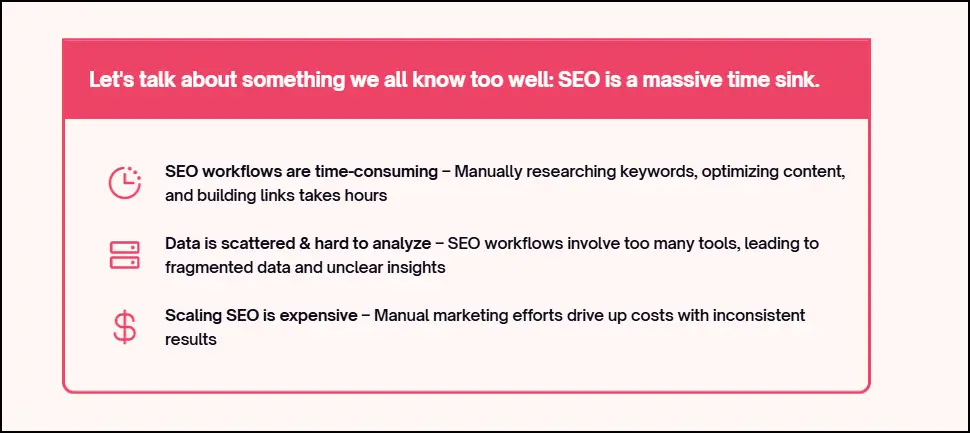
AI-driven content creation delivers substantial efficiency gains. AI SEO agencies use machine learning to analyze competitor content, user data, and search algorithms. This creates data-backed content briefs with optimal headings, structure, and tone. Yes, it is true that 84% of marketers say AI helped them create quality content faster.
Teams saved more than 5 hours weekly on average. Human writers can now focus on creativity and personal insights while AI handles the technical optimization.
Predictive analytics for future-proofing
AI SEO agencies excel at providing forward-looking intelligence. Their AI algorithms analyze search patterns and user behavior to predict future keyword trends and SERP changes. This enables proactive content adjustments. Companies can spot algorithm updates before implementation, identify trending keywords early, and forecast traffic changes based on evolving search behaviors. Such foresight helps allocate resources where data shows the highest potential returns.
Improved ROI and efficiency
The numbers make a strong case for AI SEO:
- AI SEO can increase website visitors by up to 45%
- Sales conversions improve by approximately 38% through better targeting
- Content personalization and audience targeting improves by up to 60%
- 68% of companies see better ROI after adding AI to content strategies
AI handles technical tasks like crawl analysis and structured data implementation. This frees human experts to focus on strategy. The AI SEO tools market will grow from $1.2 billion in 2024 to $4.5 billion by 2033. These numbers show how AI-powered approaches deliver measurable business results.
Key Features to Look for in a Top LLM SEO Agency
Choosing the right LLM optimization agency needs a careful look at specific capabilities that optimize successful AI-focused SEO campaigns. You should look beyond generic promises of “AI-powered solutions.” The focus should be on concrete attributes that show true expertise in this specialized field.
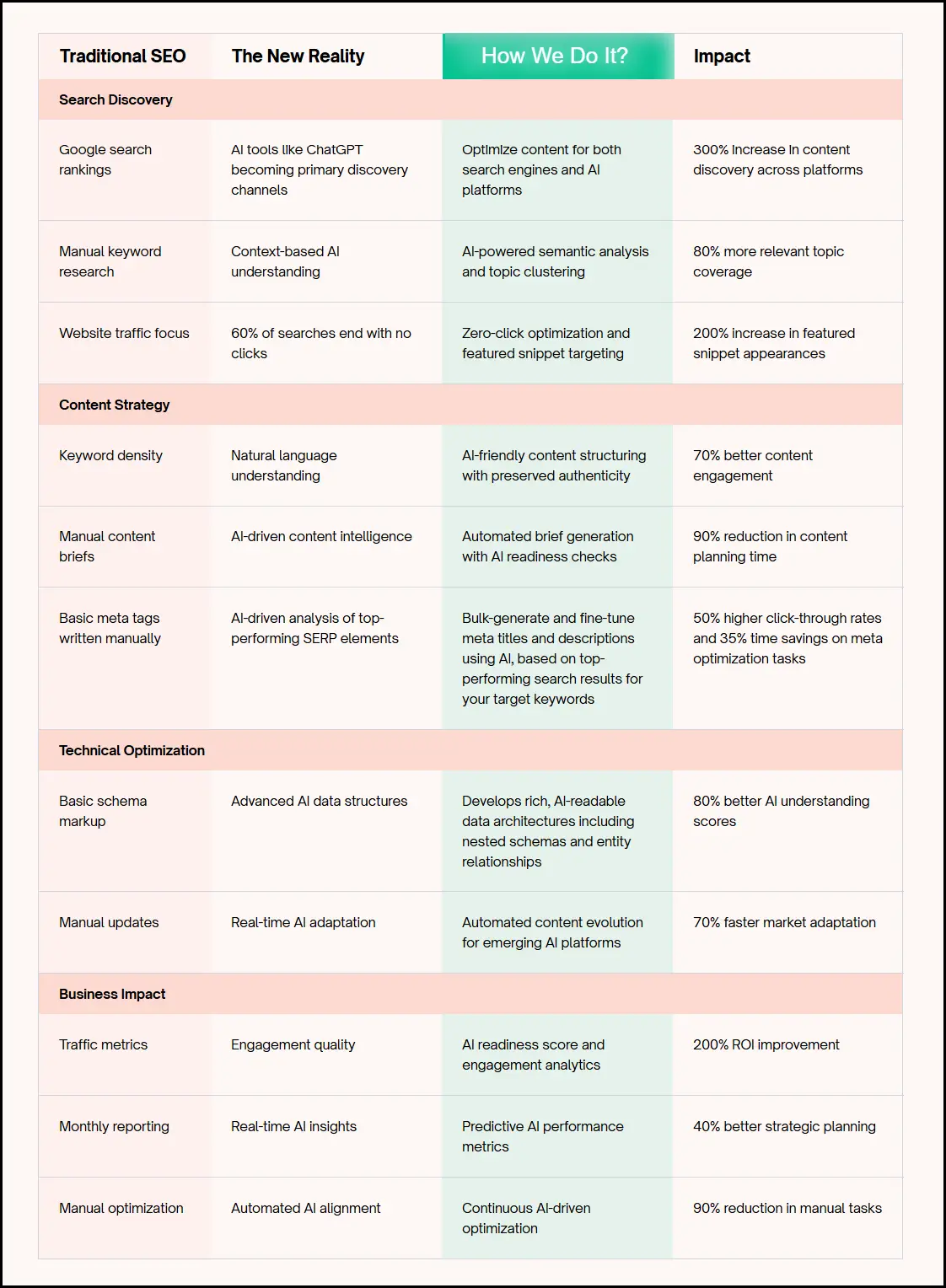
AI tool integration and transparency
Your potential partners must be clear about their AI toolset. Ask them about specific AI SEO tools they depend on—Surfer SEO for content optimization, BrightEdge for predictive analytics, or MarketMuse to identify content gaps. The agency should state how these tools improve their services, not just mention using them.
Top agencies share their processes openly instead of treating AI as a mysterious “black box.” This openness helps you understand how rankings work and why certain content gets priority. Look for detailed reporting features that give clear insights into AI-powered search performance. These reports should teach clients about the changing scene of AI-SEO integration.
Experience with LLM platforms
LLM optimization needs deep technical expertise in AI applications and machine learning algorithms. The agency’s team should know natural language processing well and have extensive experience optimizing AI citation across multiple platforms.
Only 22% of marketers have a 2-year old LLM brand visibility monitoring. Agencies with proven success in this area stand out.
Check if they can merge AI technologies naturally with traditional SEO practices. They should understand how different LLMs interpret content and what affects visibility in AI-generated responses.
Custom strategies for your industry
Each industry has its own keyword landscape and competitive dynamics. Generic approaches don’t deal very well with these unique needs. An agency that knows your field can make use of information to solve your specific challenges, not just handle generic SEO tasks.
Their industry knowledge should help them adapt data collection methods for sector-specific keyword research. AI models need fine-tuning through data increase to arrange with your market needs.
Ground case studies
Results tell the real story. Ask for case studies that show measurable improvements in organic traffic, revenue growth, and AI-powered search visibility. Focus on outcomes that match your goals—whether it’s more AI citations, higher organic traffic percentages, or better conversion rates.
The best case studies show steady AI traffic growth from platforms like ChatGPT and Gemini, along with keyword visibility in AI overviews. Beyond numbers, understand how they achieved these results and what specific strategies worked for each client.
Top 10 AI SEO Agencies (LLM Optimization Agencies) for 2025
Eight LLM optimization agencies stand out with their fresh take on AI visibility and citation engineering as AI-driven search continues to grow.
1. Webseotrends AI SEO Agency
Webseotrends leads the LLM optimization agency digital world by blending cutting-edge AI technologies with expert SEO knowledge. They are over 5-year old full-service digital marketing agency operates from headquarters in both the United States and India. This setup gives them a unique mix of global and local expertise.
Their Large Language Model Optimization (LLMO) strategies set Webseotrends apart from regular SEO providers. The numbers tell an interesting story – generative AI traffic jumped by 1,200% between July 2024 and February 2025. Webseotrends stepped up during this time to help brands get noticed in AI-generated responses.
The agency puts entity optimization first. They make sure your brand name and related terms show up consistently across online channels where LLMs can spot them. Google’s search market share fell below 90% in October 2024 – something we hadn’t seen since March 2015. This shows why visibility beyond traditional search matters more than ever.
Webseotrends’ AI SEO services include:
- Implementation of structured data to strengthen entity visibility in knowledge graphs
- Strategic content optimization tailored for LLM citation
- Technical SEO audits powered by AI analytics
- Question-based content creation targeting user queries
Traditional SEO might not be enough anymore to get your content noticed. AIOs (AI Overviews) now reach 1.5 billion monthly users, which shows how vital AI has become in search experiences. Big players like Gemini and ChatGPT keep growing fast, with 350 million and 600 million monthly users respectively as of March 2025.
The results are impressive. Clients usually see their traffic grow by 61-80% within four months of starting AI-driven optimization strategies. Webseotrends brings together AI’s speed with human know-how. They know AI excels at crunching numbers and providing analytical insights, but human expertise remains key for strategy and authentic content.
The price point works for everyone. Webseotrends has flexible strategies available to companies of all sizes, from startups to enterprises. This matches what the industry has found – AI SEO can deliver better results at much lower costs than traditional methods.
This balanced approach helps businesses adapt to today’s search environment. Citation engineering, entity recognition, and LLM visibility have become just as important as traditional ranking factors.
2. Omnius
Omnius works with SaaS and Fintech companies. They excel at multi-channel SEO that has both traditional search engines and LLM platforms like ChatGPT, Perplexity, and Gemini. Their clients get amazing results—one startup saw 64% higher conversion rates on their new website and 110% organic growth in six months. The company now focuses on optimizing content for ChatGPT’s billion daily AI prompts.
3. 42DM
This full-cycle B2B marketing agency leads the way in Search AI Optimization (SAIO)/GEO. They help tech companies become more visible in AI searches. The Jersey City-based company builds technical foundations for AI search, launches SEO for AI platforms, creates third-party trust signals, and manages organic social activities. One client got 150 clicks from AI engines in two months with an 8% conversion rate. The 7-year-old company’s rates range from $50-$99 per hour.
4. Conductor
This company started as a traditional SEO platform but grew into a leading website optimization solution. Their AI platform has unique features like AI Topic Map that shows how LLMs see website content. They also offer tools that measure visibility and market share in AI engines accurately. Samsung and Citibank praise how well they blend SEO into content strategy.
5. WebFX
This marketing agency has earned 1,100+ client reviews and a 4.9-star rating on Clutch. Sarah Berry, their Lead Web Marketing Consultant, brings over 10,000 hours of experience and explains digital revenue growth strategies.
6. iPullRank
The company blends SEO, content strategy, and analytical insights for enterprise brands. They excel at relevance engineering with services like conversational search ranking strategies, knowledge graph optimization, and AI-powered SEO monitoring.
7. Digital Brand Expressions
DBE created Search Artificial Intelligence Optimization (SAIO) after testing early AI search tools. The 22-year-old Princeton, NJ company charges $150-$199 per hour and specializes in content restructuring for AI citation.
8. Avenue Z
Gemini named Avenue Z the #1 Generative Engine Optimization (GEO) agency. The company creates groundbreaking AI Optimization (AIO) solutions built for generative search platforms. They won the “Cognitive Communications Solution of the Year” from AI Breakthrough Awards. The Miami-based company combines media placement, content development, and LLM optimization to boost brand visibility. Their AI Share of Voice Audit gives businesses a clear picture of their AI platform visibility. The 16-year-old company charges $150-$199 per hour.
9. Coalition Technologies
The company mixes traditional SEO with prompt-aware optimization. They focus on LLM content optimization and technical SEO. This approach helps their clients get mentioned more often in AI responses across platforms.
How These Agencies Use AI to Drive SEO Success
Leading LLM optimization agencies use sophisticated AI techniques that exceed basic keyword optimization. Their methods help make content not just findable but also citable by large language models.
Natural language query optimization
Agencies now focus on semantic understanding rather than simple keyword matching. Advanced NLP techniques let them analyze how users naturally ask questions and structure content. This approach captures more conversational queries, especially when voice search keeps growing.
These specialists use tokenization and vectorization to break down text into analyzable components. The process converts words into numerical values that machines can process. Entity recognition is vital—it identifies people, places, and concepts within content to help LLMs understand context and relationships between topics.
Schema and structured data implementation
Structured data acts as a bridge between human content and machine understanding. Web content gets converted into parsed data objects that AI systems categorize precisely. We used JSON-LD schema markup—Google’s preferred format—because it integrates smoothly without disrupting HTML elements.
Most top agencies will focus on schema types that improve AI visibility by 2025. These include FAQ schema (despite reduced visibility in traditional results), product schema, and article schema. Search engines and LLMs can extract precise information from webpages to directly answer user questions with this structured approach.
Citation engineering for AI visibility
Citation engineering marks a fundamental transformation in optimization strategy. Content gets structured to maximize the chances of being cited by large language models. Agencies optimize content not just for readers but for machine “referencability”.
Technical implementations use semantic structure with H2 and H3 headings that mirror natural user queries. Clean 3-6 sentence paragraphs provide direct, unambiguous answers. Semantic relevance plays a huge role—content with high cosine similarity to user prompts will rank even without exact phrase matches.
Content freshness and update cycles
Recent studies show LLMs’ strong recency bias. Nearly 65% of AI crawler hits target content published within the past year. About 79% of total hits focus on content from the last two years.
The freshness factor varies by industry today. Financial services and travel content need more frequent updates. Some educational content stays relevant longer. Agencies identify optimal update frequencies based on topic volatility and seasonal patterns through careful analysis.
Case Studies: Real Results from LLM SEO Campaigns
Numbers tell the story. Companies that embrace LLM optimization strategies see amazing results in visibility, traffic, and conversions. These real-life case studies show how AI-focused SEO campaigns can transform businesses when implemented correctly.
Boosting AI citations in 2 months
Success stories from the ground show how quickly strategic LLM optimization can make a difference. A cybersecurity company analyzed 15 recent breach reports for small businesses. Their content now appears in 70% of relevant ChatGPT responses about SMB security. This dramatic change happened just eight weeks after they started their LLM-focused content strategy.
A tech firm worked with a specialized LLM optimization agency and got 150 clicks straight from AI engines in two months. They achieved an 8% conversion rate on this traffic. This shows a fundamental change in how businesses track visibility. The focus has moved from traditional rankings to how often content appears in AI-generated responses.
Increasing organic traffic by 400%
AI-optimized content brings stunning traffic gains. Organizations in a variety of industries have seen huge growth in AI-referred visitors. The events industry saw a mind-blowing 900% growth in ChatGPT referrals within 90 days. E-commerce and finance sectors both saw more than 400% growth in ChatGPT traffic during this time.
These numbers are just the beginning. While competitors see their traditional search traffic drop, companies with proper LLM optimization strategies attract visitors who convert 4.4 times better than regular organic search visitors. LLM-referred traffic makes up about 0.25% of total traffic now. Projections suggest this could grow to 10% of the overall traffic mix by late 2025.
Improving conversion rates with AI content
The effect on conversions matches the impressive visibility and traffic gains. AI-generated email campaigns convert 94% better than non-AI campaigns. Companies using AI chatbots have seen value-per-chat improve by over 50%. Their customer satisfaction scores match human-led interactions, and chat conversion rates have jumped by 43%.
LLM-driven visitors convert 4.4 times more often than traditional search visitors. This shows the high quality of AI-driven traffic. Results vary by sector though. SaaS companies see similar conversion rates between LLM (6.69%) and organic (6.71%) traffic, which suggests strong potential in complex industries.
Choosing the Right LLM SEO Partner for Your Business
Choosing your ideal LLM optimization agency needs more than a simple service comparison. A careful decision at this stage leads to better results and proper arrangement with your needs.
Match agency strengths to your goals
Your SEO objectives must be clear and specific. Rather than aiming to “increase traffic,” target something like “rank for specific AI-generated answers within three months”. The most effective goals should follow the SMART framework: Specific, Measurable, Attainable, Realistic, and Time-based. The next step is to look for agencies with proven experience in your particular industry, since each sector comes with its unique keyword landscape and competitive dynamics.
Evaluate their AI methodology
The right partners should show you how they track AI visibility on different platforms. Leading agencies must demonstrate their system to monitor your brand’s mentions in AI-generated answers. On top of that, it matters that they customize optimization for various platforms (Google SGE, ChatGPT, Perplexity) instead of using one approach for everything. Make sure to ask for concrete examples of AI-optimized assets from your industry.
Ask the right questions before hiring
These questions are crucial before making your final choice:
- “How do you track AI-specific metrics versus traditional rankings?”
- “Can we communicate directly with SEO specialists handling our account?”
- “What exact monthly deliverables are included in your service?”
- “How frequently will we receive performance updates?”
- “How do you adapt strategies when AI platforms change their algorithms?”
Note that agencies ranking themselves in AI search results usually show an advanced grasp of LLM optimization techniques.
Future of SEO: What Comes After LLM Optimization?
The rise of search technology goes way beyond current LLM capabilities. LLM optimization agencies that think ahead are getting ready to find the next frontiers while LLM optimization becomes standard practice.
Voice search and multimodal AI
Users interact with search differently now that voice capabilities merge with visual elements. Google’s AI Mode combines Lens with Gemini and understands entire scenes. It identifies objects, materials, colors, and relationships between elements. Users can snap photos, ask questions about what they see, and get detailed responses with useful links through this multimodal capability.
Mobile searches through voice make up 20% of all searches. This trend grows faster because of advances in generative AI and multimodal interactions. Voice search optimization needs to focus on longer, more conversational phrases. Questions should start with who, what, when, where, why, and how.
AI shopping and product discovery
AI agents guide purchasing decisions and change the shopping experience. Visa and Mastercard develop AI-enabled payment systems. PayPal builds a Financial Operating System made for AI agents. These tools handle everything from grocery shopping to travel booking with minimal input from users.
AI shopping assistants help users find, compare, and buy products quickly. By 2025, 28% of shoppers will see AI as a helpful shopping tool. AI-driven recommendations show up in conversations instead of obvious advertisements.
Search 3.0 and beyond
Search 3.0 brings a new way to think about finding information. Similarweb’s Search 3.0 data fine-tunes daily to provide fresh intelligence about search ecosystems. This method combines mobile and desktop data insights and gives access to long-tail keywords that can bring real traffic.
Success depends on optimizing for conversational search, visual discovery, and building visibility across platforms. The line between search engines and AI assistants keeps getting thinner. This creates a unified discovery world where LLM optimization agencies must become skilled at complex visibility strategies.
AI + SEO = Results: Why Webseotrends Is Your Go-To Agency
AI and search engine optimization together create a winning formula for digital success. Research backs this powerful combination—67% of businesses now use AI tools for content marketing and SEO, and 78% say they’re happy with what they’ve achieved. Companies that know how to use AI well see their SEO and content marketing ROI jump by 68%.
Webseotrends shines at this sweet spot by offering evidence-based strategies that combine technology and human expertise. This balance matters because websites using only AI-generated content see their traffic drop by 17% and lose 8 ranking positions on average. When humans step in to work with AI content, traffic decreases by just 6%.
The search landscape changes faster every day, yet Webseotrends creates custom solutions instead of generic approaches. Each strategy aligns with your unique goals, industry, audience, and budget.
Some websites lose 18-64% of their organic traffic to AI Overviews. Webseotrends responds by adjusting strategies to keep you visible on both traditional and AI-powered search platforms. The company’s worldwide reach brings insights from different markets while offering competitive prices that work for businesses of all sizes—from fresh startups to large enterprises.
A partnership with Webseotrends gives you a LLM optimization agency that knows what AI can and cannot do, which helps your content stay visible wherever customers look for you.
Key Takeaways
The search landscape is rapidly evolving from traditional keyword ranking to AI-powered citation systems, requiring specialized LLM optimization strategies to maintain visibility in 2025 and beyond.
• LLM optimization focuses on citations over rankings – Success now depends on being referenced by AI systems rather than just achieving high search positions, as traditional search traffic is predicted to drop 25% by 2026.
• AI-driven SEO delivers superior ROI and efficiency – Businesses see up to 45% more website visitors and 38% better conversion rates, while AI-referred traffic converts 4.4 times better than traditional organic search visitors.
• Choose agencies with proven AI methodology and transparency – Look for partners who openly share their AI toolset, demonstrate experience with LLM platforms, and provide industry-specific case studies showing measurable citation improvements.
• The future requires multimodal optimization strategies – Voice search, visual discovery, and AI shopping assistants are reshaping how users find information, demanding agencies that optimize for conversational queries and cross-platform visibility.
• Human oversight remains essential for AI SEO success – While AI excels at data processing and pattern recognition, the most effective strategies combine technological capabilities with human strategic insight and content authenticity.
As search continues evolving toward AI-mediated discovery, partnering with specialized LLM optimization agencies becomes crucial for maintaining competitive visibility across traditional search engines and emerging AI platforms.
FAQs
Q1. What is LLM optimization and why is it important for SEO?
LLM optimization is the process of optimizing content to be recognized and cited by large language models used in AI-powered search. It’s important because it helps businesses maintain visibility as search shifts from traditional keyword ranking to AI-driven citation systems.
Q2. How does AI SEO differ from traditional SEO?
AI SEO focuses on earning citations from AI systems rather than just achieving high search rankings. It emphasizes comprehensive, conversational content that answers user queries fully, and uses predictive analytics to anticipate future trends.
Q3. What benefits can businesses expect from working with an AI SEO agency?
Businesses working with AI SEO agencies can expect smarter keyword strategies, faster content optimization, improved ROI, and better efficiency. Some companies have seen up to 45% increase in website visitors and 38% improvement in sales conversions.
Q4. How do top LLM optimization agencies use AI to drive SEO success?
Top agencies use advanced techniques like natural language query optimization, schema implementation, citation engineering, and content freshness strategies. They focus on making content not just discoverable, but also citable by large language models.
Q5. What should businesses look for when choosing an LLM SEO partner?
When choosing an LLM SEO partner, businesses should look for agencies with transparent AI methodologies, experience with LLM platforms, industry-specific strategies, and proven results through case studies. It’s also important to ensure their goals align with the agency’s strengths.